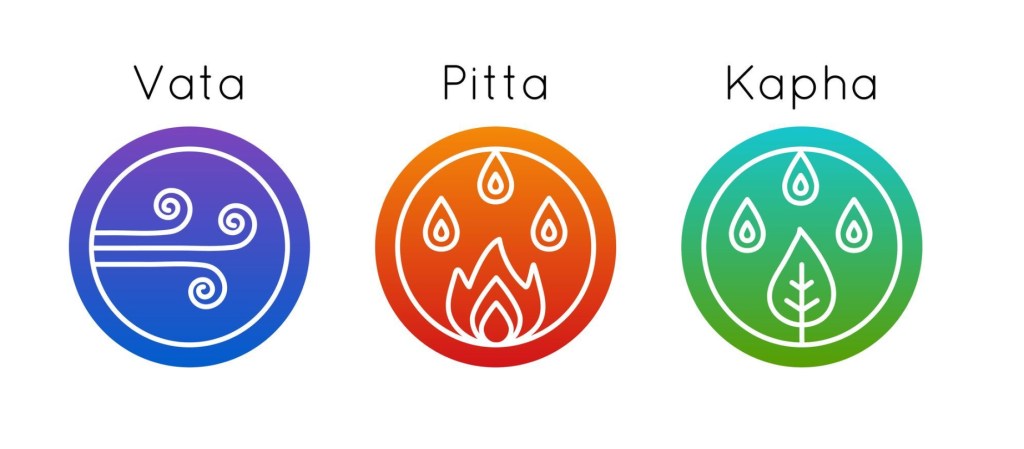
If you have any kind of background in Ayurveda, you’ve probably heard about the Doshas. If not, that’s fine. I got you, boo boo.
For the uninitiated, Ayurveda is a 5,000 year old medical system, endemic to the Indian subcontinent. Its teachings center around finding balance in the body, understanding individual social, spiritual, and psychological patterns, and proper nutrition. Skilled Ayurvedic practitioners of panchakarma (Ayurvedic herbalism) carefully blend medicinal herbs and steep them in balanced oils for application to the body. These blends are based on the practice of rasashastra, or Indian Alchemy. The practice of blending herbs and balancing them with various mineral components dates back to the 5th century.
So, in short, Ayurveda is a complex medical system that has been around for a HOT minute. Moreover, it shows no signs of dying out as a practice anytime soon. As of 2024, about 80% of the population of India and 85% of the population of Nepal reports using Ayurvedic wisdom in daily living. So, while western medical professionals might turn up their noses at the “pseudoscience” of ancient Indian medicine, there is no denying it has stood the test of time.
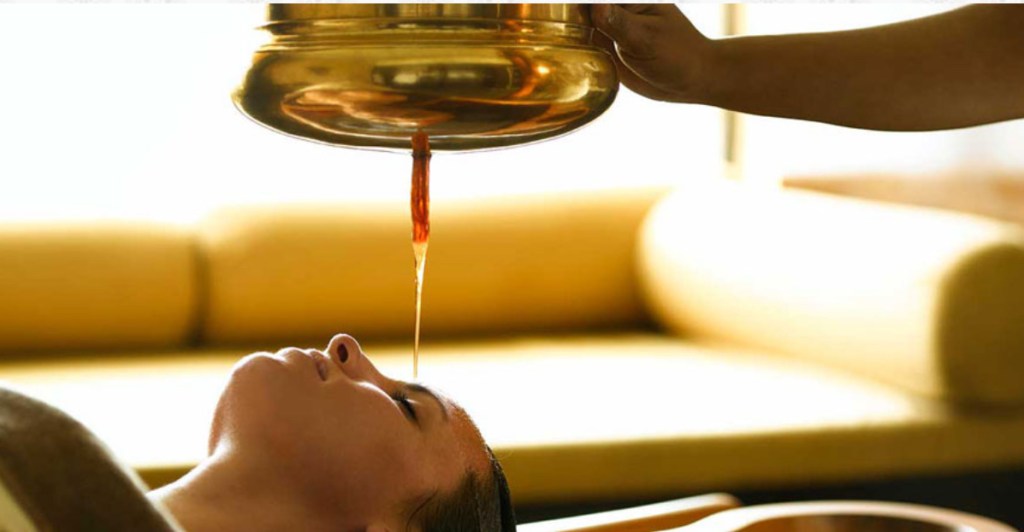
Ayurvedic doctrine states that while each of us is a combination of the three doshas, we often have one “leading.” In Ayurvedic treatments, sesame oil is used in copper bowls. Sesame is “tridoshic”— having a perfect balance of Vata/Pitta/Kapha. Copper is used to ground and purify—optimizing nervous system function, regulating digestion and helping to achieve optimal hormone balance. Heating the oil in a copper bowl confers these properties before it is gently applied to the skin. Studies have shown that after just 19 minutes, changes occur in the bloodstream as a result of this practice.
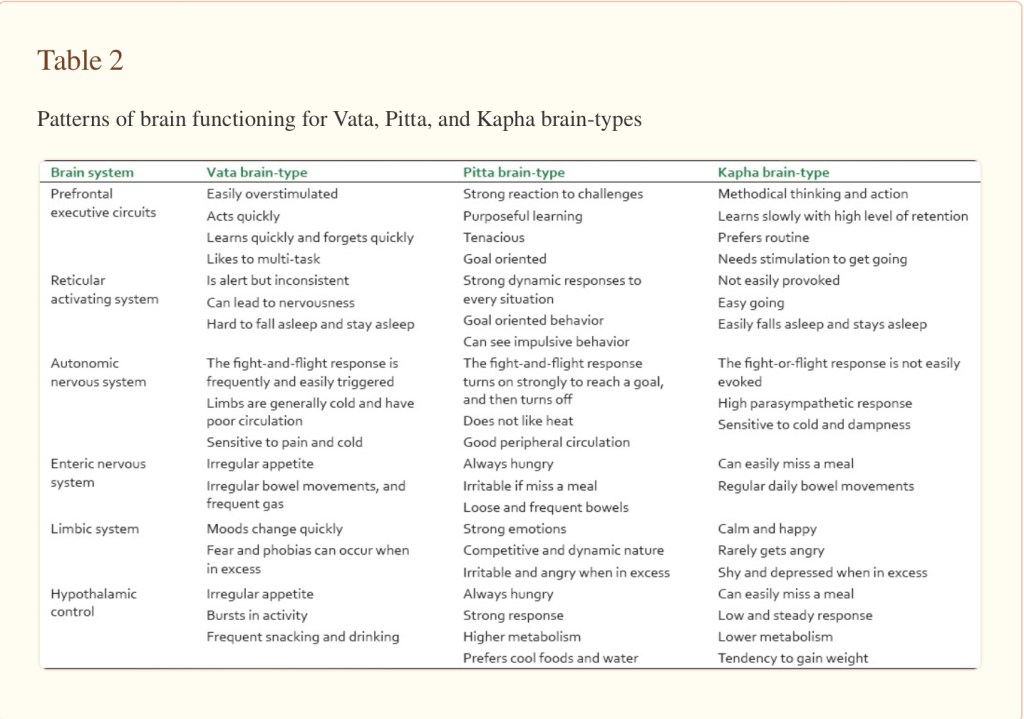
Moreover, additional studies (published on the NCBI) demonstrate that one’s leading dosha is reflected in body physiology. There is actually a tangible difference, neurologically speaking, between each “dominant type”.
Pursuant to my service with Ashley (Abyanga with Swedana steam bath) I learned that despite thinking for my whole life that I was a Pitta constitution, I lead with Vata. This led me to change some habits in my daily life. I noticed that bubbly drinks and cold foods always led to my feeling bloated and uncomfortable. Cutting them out helped me to feel a bit more comfortable in my body. I was surprised what a difference it made! Take it from me: knowing your dosha and following Ayurvedic recommendations can really help you to live a more comfortable, balanced, lifestyle.
I’ve included a description of each dosha below.
Vata: Ether/Air Dry and Cool nature . Spring/Autumn. Tend to be small framed and thin. Vata is the social butterfly: talkative, extroverted and restless. They have a hard time staying put— and have something to add to almost any conversation. Vata people are light sleepers, and can come off as nervous or anxious. They benefit from warm environments and foods.
Pitta: Fire/Water Hot and Moist nature. Summer. Tends to be muscular, medium framed. Pitta people are motivated, charismatic, and natural leaders with large appetites. Sometimes they over-commit, and should focus on work/life balance.They benefit from cool environments and foods.
Kapha: Water/Earth Cool and Soft nature. Spring. Tends to be strong and “big boned”.
Kapha (pronounced COP-Ha) people are good natured and empathetic— often serving as a support system for others in their lives. They go about their daily activities methodically, and rarely get upset. They benefit from warm climates and nourishing, awakening, foods.
In short: I was wrong about my dosha, and finally getting it right helped me to establish new habits, live within my natural rhythms, and manifest meaningful change!
So, what’s your Dosha?
Sources:
Travis FT, Wallace RK. Dosha brain-types: A neural model of individual differences. J Ayurveda Integr Med. 2015 Oct-Dec;6(4):280-5. doi: 10.4103/0975-9476.172385. PMID: 26834428; PMCID: PMC4719489.

 Aligned Massage
Leave a comment